

Scroll to Learn About Brutalism

CHAPTER 1:
Post-War Architecture and the Roots of Brutalism
In the decades following World War II, many European cities were in ruins. Bombed-out streets, decimated housing, displaced communities.
Brutalist architecture emerged in this moment not only as a style, but as a political promise: architecture for everyone.
Architects and planners believed that buildings could serve social purpose, rebuild society, and bring equality. The movement grew out of modernism, and was shaped by socialist thinking that saw housing, public institutions, and civic infrastructure as foundational to communal life.
Brutalist buildings became symbols of hope, solidarity, social housing, affordable architecture, civic institutions meant to serve ordinary people.
These choices aligned with socialist ideals — visual honesty, no unnecessary hierarchy, no visual markers of class.

CHAPTER 2:
Socialist Values in Concrete Form
The words béton brut (“raw concrete”) captured more than materiality. They captured an ideal: to reveal structure, to be honest about what a building is.
Brutalist architects rejected decoration and ornament. They embraced exposed concrete, strong geometries, simple materials because these communicated nothing but truth. These choices aligned with socialist ideals — visual honesty, no unnecessary hierarchy, no visual markers of class.
Brutalist architecture’s functionalism, its monumental scale, its repetitive forms were meant not to impress elites, but to ensure durability, affordability, and shared use.

CHAPTER 3:
Brutalism and Social Housing Projects
A major arena for Brutalism was social housing — housing built or commissioned by governments or councils, intended to provide safe, modern homes for working‑class or lower‑income citizens.
These projects reflected commitments to socialist principles: universal access, equality, community, public facilities. Civic buildings — libraries, universities, municipal halls — followed the same logic: architecture to serve the public good rather than private profit.
In Britain, for example, Brutalism appeared in council housing, council estates, public schools, public libraries. In Eastern Europe and socialist nations, monumental concrete blocks were used extensively to house millions, to create equality in built form.

CHAPTER 4:
Brutalism Criticised — What Went Wrong?
Socialist‑inspired Brutalism carried its contradictions. Large‑scale housing projects sometimes suffered from underfunding, maintenance challenges, social isolation. Elements of design intended to serve equality could in practice feel impersonal, or oppressive in poor light, cold climate, or when decay set in.
Some Brutalist structures were criticized for being harsh, for failing to adapt to human scale or everyday life. Yet these critiques are part of the story. They force reflection: How do ideals translate into the lived experience of architecture? How do communal intentions survive time, resources, politics?
By studying the history of Brutalist architecture one sees what architecture can do: create belonging, manifest values, shape identity.

CHAPTER 5:
Why Brutalist Architecture Is Being Rediscovered
Brutalism is being rediscovered. Researchers, students, photographers, architects are looking again at these buildings. They see raw concrete surfaces, bold forms, strong shadows not only as photographic subjects, but as reminders of architectural ambition rooted in equality and community. Some buildings are being preserved, others risk demolition.
The revival of interest in social architecture, sustainable architecture, socially engaged design draws threads back to socialist ideals in Brutalism. By studying the history of Brutalist architecture — its socialist roots, its social housing, its public institutions — one sees what architecture can do: create belonging, manifest values, shape identity.

CHAPTER 6:
Lessons from Brutalist History Today
1. Architecture and equality are inseparable: Brutalist history shows that when architecture is driven by social justice, design decisions carry moral weight.
2. Material truth matters: Exposed concrete, visible structure, honest forms remind us that buildings have stories embedded in their surfaces.
3. Public investment shapes public life: Housing, public schools, libraries built by state or council institutions invested in communities; when support falters, neglect follows.
4. Preservation is political: Saving Brutalist buildings is not nostalgia. It is maintaining visible records of what society once believed possible.

CHAPTER 7:
Why Socialist Ideals Still Resonate
Today, when cities face housing crises, inequality, climate challenges, there is something powerful in revisiting Brutalism’s socialist promise.
Brutalist buildings show how architecture can be an instrument of social good. They teach us that design can reflect values. They remind us that beauty can be purposeful. And that concrete, when handled with care and conviction, can carry dreams.
Explore some of my most loved pieces
-
The Barbican Centre - miniature concrete model
Regular price £45.00 GBPRegular price -
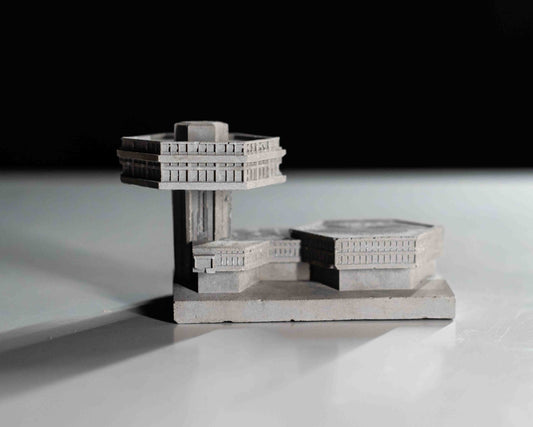
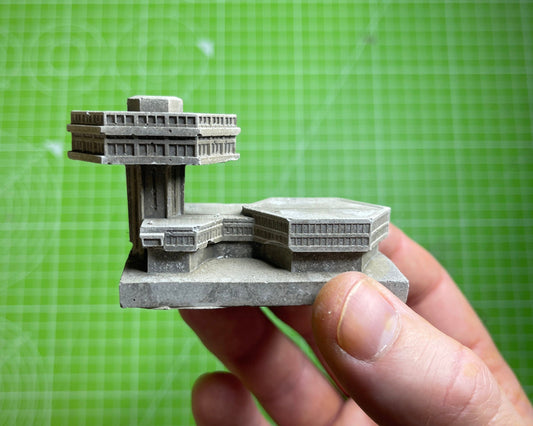
Forton Services, Lancashire – Miniature Concrete Model
Regular price £40.00 GBPRegular price -
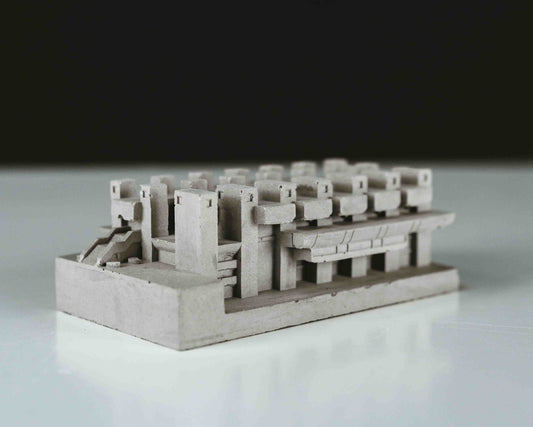
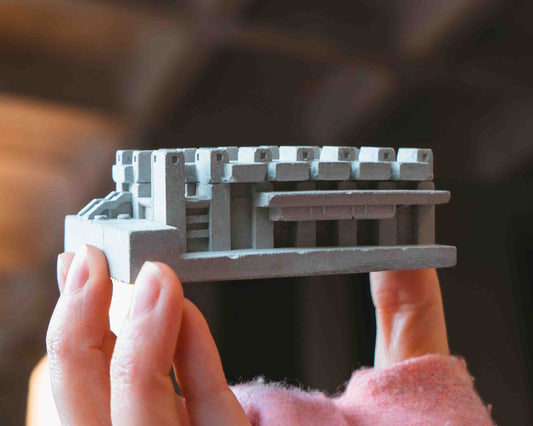
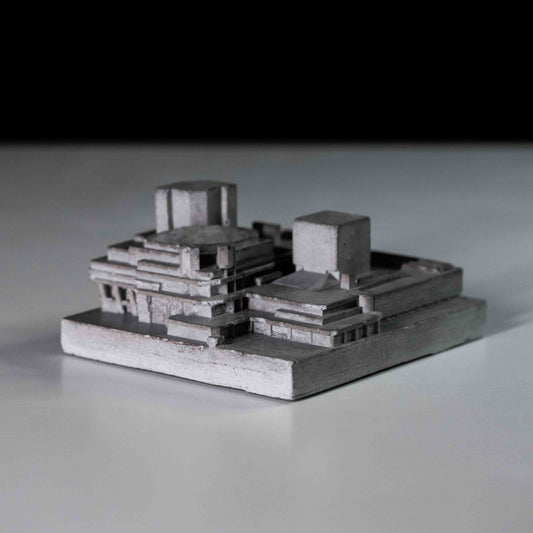
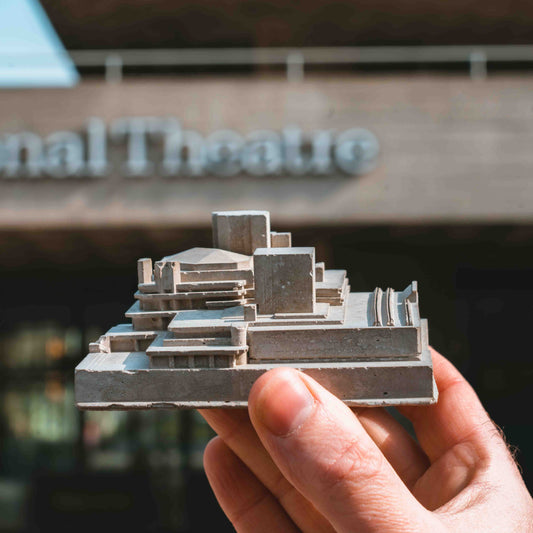
National Theatre – Miniature Concrete Model
Regular price £45.00 GBPRegular price -
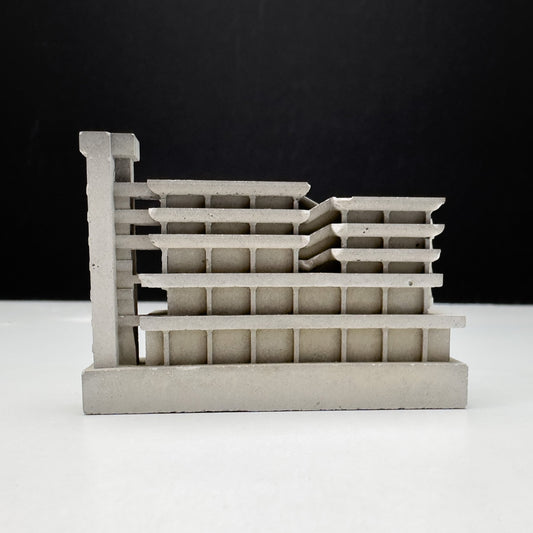
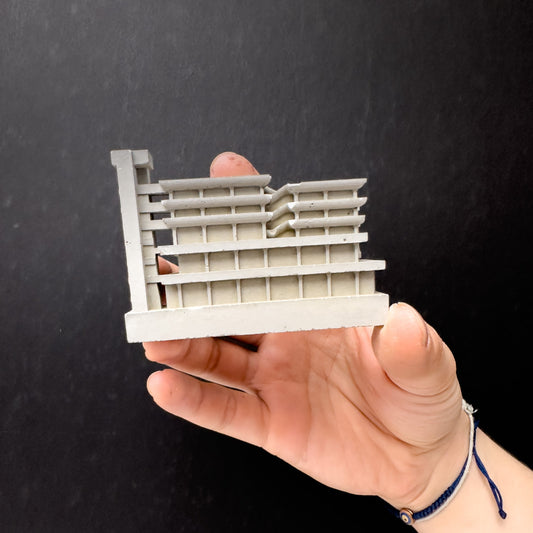
Tricorn Centre, Portsmouth – Miniature Concrete Model
Regular price £40.00 GBPRegular price
Where to go from here...?
If you’ve found yourself curious about Brutalist architecture, you’re not alone. Spaceplay is for people who see value in overlooked buildings, who care about place, and want to hold onto and share their stories and memories. You can find out more about my story and work with the links below.


What Is Brutalist Architecture? A Simple Introduction to Brutalism + Concrete Models |Spaceplay
Learn what Brutalist architecture is, where it came from, and why it still matters.
Discover its history, meaning, and cultural legacy. Learn why Spaceplay creates
handmade concrete models that honour iconic Brutalist buildings.